

Why Choose Us?
High Quality Materials And Workmanship
Our skateboard manufacturers use the highest quality materials, such as Canadian maple and high-strength composites. These materials not only ensure the durability and toughness of the skateboard, but also provide excellent elasticity and flexibility. Our production process includes multi-layer lamination technology to ensure that each skateboard can withstand high-intensity use without deformation.
Customized Design Services
We provide comprehensive customized design services to meet the unique needs of different customers. Be it shape, size, pattern or colour, we can tailor it to your requirements. Our professional design team will work closely with you to ensure every detail is perfect, helping your brand stand out in the market.
Advanced Equipment
Our factory is equipped with world-class production equipment and technology, including CNC engraving machines, automated painting equipment and high-precision CNC cutting machines. These equipment not only improve production efficiency, but also ensure the accuracy and consistency of each skateboard, thus ensuring the high quality and stability of the product.
Quality Assurance
We have a complete set of strict quality control systems. From raw material procurement to production process to final product inspection, every link has undergone strict quality testing. Our quality control team inspects each skateboard one by one to ensure that the products leaving the factory meet international standards and high customer requirements.
Environmental Protection And Sustainable Development
We are committed to environmental protection and sustainable development, using environmentally friendly materials and green production processes to reduce the impact on the environment. Our production waste is strictly processed to ensure it does not pollute the environment. At the same time, we continue to optimize production processes, improve resource utilization, and are committed to preserving a healthy earth for future generations.
Fast Delivery
Our production plant has strong production capacity and a flexible production scheduling mechanism, which can quickly respond to customer orders and ensure on-time delivery. Whether it is small batch customization or mass production, we can complete it efficiently to ensure that your market needs are met in a timely manner.
Introduction of Cruiser Surfskate
A Cruiser Surfskate, also known as a Surf Skateboard or Surf Skate, is a specialized type of skateboard designed to mimic the feeling of surfing on land. A Cruiser Surfskate typically features a long, narrow deck with a surfboard-like shape, allowing riders to simulate the movements and maneuvers of surfing on concrete or pavement. The deck may have a slight concave or camber to provide a surfboard-like feel and enhance maneuverability.
Our Related Products
Askateboard is a type of sports equipment used for skateboarding. Skateboarding is an action sport that involves riding and performing tricks using a skateboard, as well as a recreational activity, an art form, an entertainment industry job, and a method of transportation.


Benefits of Skateboard
It's a great cardio workout
Skateboarding is a sport that gets your heart and blood pumping, so it's a fantastic cardio workout.
It's great for relieving stresse
When you're focusing on skateboarding, you can't dwell on any other worries. Some people say skateboarding even puts them in a meditative state, so it's the perfect activity for relieving stress.
It's really social
Skateboarding brings together people from all walks of life, so it can be a great way to meet like-minded people and expand your social circle.
It's a great way to get around
Skateboarding is a perfect transportation option. Jump on your board and you'll get where you need to go faster than walking or jogging.
It can help make you more coordinated
If you've always felt a little clumsier than the average person, skateboarding can help you improve your precision and coordination
It improves patience
As you work toward nailing those moves, you'll learn to become more patient. The patience you learn in the skate park can serve you well in your professional and personal life.
The Different Types of Skateboards
The Mini-Cruiser Skateboard
The mini-cruiser is a shorter version of the cruiser skateboard. It's the perfect entry-level deck for young children but can also be used by intermediate skaters to cruise around town, pull off a few tricks, ride a bowl, or hit a park. They were introduced during the sport's early days and gained a new boost in popularity in the 2010s. This short and narrow design is highly portable and fits in a backpack, making it a hit among high-school students. It comes with soft wheels and features a kick tail and a textured surface so that riders can do a few basic tricks and get around town. They are often made from plastic and require special trucks.
The Double-Kick Popsicle Skateboard
The double-kick popsicle skateboard is the standard skateboard and the most popular and widely used design. It works well in skateparks, street skating, and almost all types of riding. They're lightweight and a great option for those who are getting into skateboarding for the first time.
The Carve Skateboard
The carve skateboard is a design that generates its own speed through effortless pumping. It was designed to mimic the surfboard's behavior on the face of a wave on flat ground. It's a great option for practicing turns and deep carves, but it is also a favorite plank for riding a bowl. This somewhat hybrid skateboard design is becoming a popular template because it blends the characteristics of both cruisers and longboards.
The Classic Longboard Skateboard
The longboard is a long and stable skateboard shaped for casual cruising on the boardwalk, fun and laid-back long-distance rides, and skating faster on more or less steep hills. They're a good option for first-timers because they offer a large riding platform that makes it easy to learn how to balance. But they're also a great pick for skaters of all ages and experience levels.
The Downhill Longboard Skateboard
The downhill longboard is a skateboard that has been specifically designed to be ridden on steep mountain roads and in slalom racing events. It's a unique skateboard shaped for a very special purpose and delivers more stability and speed than a classic longboard. When bombing hills at top speeds, skaters need a wide wheelbase and cutaway fenders that enable them to slide and control speed more safely. You'll find two main designs when it comes to shape and contour: drop-through and standard concaves.
The Electric Skateboard
One of the first variations of the pre-eSkate era was the paddle longboard, an off-road deck featuring giant all-terrain wheels and a long flexible pole with a rubber ball at the end used to propel, steer, and slow the board. The model eventually morphed into an electric-powered skateboard equipped with a small motor. The design is supposed to target young urban commuters and gadget freaks. These motorized skateboards can travel around five miles at speeds of up to 15 miles per hour. All a skater needs to do is move forward and backward on the deck to activate the front and rear pads. There are also models equipped with a handheld remote that can be used to accelerate and brake the electric skate.
Skateboard Deck Wood Types
Quality skateboard decks are made from three wood types: hard maple, birch, and bamboo. Generally, hard maple is used for the smaller, popsicle-shaped skateboards used for tricks, while birch and bamboo are more often used for long and cruiser skateboards. Let's dive further into these different varieties of wood used to make skateboard decks.
Canadian hard maple wood, also called rock maple or sugar maple, comes from magical trees that grow around the Great Lakes area in North America. Not only is this wood used to make skateboards, but it is also used for basketball courts, bowling alleys, furniture, etc. Most importantly, the mystical elixir maple syrup also comes from Canadian hard maple trees.
Hard maple wood is very dense and strong. The strength of maple comes from the cold winter environment of the Great Lakes region. The winters are long and cold, so the trees grow slowly, forming thinner and tighter growth rings. These tight growth rings give the wood its high density.
Birch is a beautiful and extremely useful tree. It is a good wood to burn in your fireplace on cold nights due to its high BTU production. The papery bark makes an excellent fire starter. Oh, and it's a good wood to make skateboard decks from!
Birch wood is a dense and strong hardwood, but its density is not as high as that of hard maple. Because of its lower density, a birch skateboard deck will not be quite as strong as a maple deck and will have more flex. Birch still has many desirable qualities that make for an excellent skateboard.
Birch is also a cheaper wood than maple. Because of its lower cost, birch wood decks are often at a lower price point, intended for beginner skaters. You will want to stick with a hard maple deck if you are an advanced skateboarder doing advanced maneuvers. Birch decks will do you just fine otherwise.
Bamboo is an incredible plant used in a massive variety of applications, from flooring to structural buildings to furniture to even skateboard decks. Unlike maple or birch, bamboo is not a tree but a grass. Like all grass, bamboo grows incredibly fast, which makes it a very eco-friendly and sustainable material to make things from.
Bamboo is a popular choice for longboard and cruiser decks and is also used for trick skateboard decks. Decks made from bamboo are flexible with a high rebound, but are also very durable with high impact absorbency. They are very responsive and comfortable decks for cruising and carving.
Fiberglass and carbon fiber are extremely light and strong materials that can be used to make virtually unbreakable objects. They are both easily shaped and formed into almost any shape imaginable. Both fiberglass and carbon fiber can be made as dense and as thick as the manufacturer wants, and they can be stronger than steel. They are waterproof and extremely weather-resistant. If properly taken care of, fiber reinforcements can last for an insanely long time.
You can't make a skateboard without adhesive. Wooden skateboard decks are built with quality wood adhesive. Adhesive, and are commonly used glues because they create an excellent bond and are waterproof, so the deck shouldn't delaminate if exposed to the elements. They are also water-based, which makes them safer to use than epoxy adhesives.
What are the Applications of Skateboard

Exercise
Skateboarding is a great form of exercise that can improve your cardiovascular health, balance, and coordination.
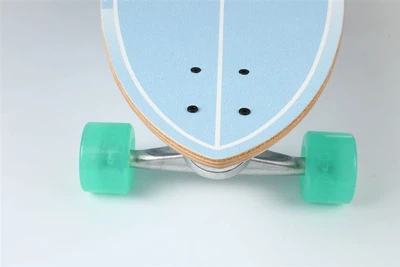
Transportation
Skateboards can be a fun and efficient way to get around, especially in urban areas where traffic and parking can be a challenge.
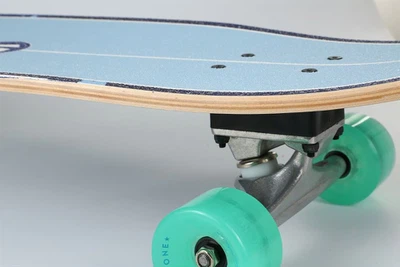
Filming
Skateboards can be used as a camera dolly to capture smooth and dynamic shots for filming. This technique is commonly used in film and music video productions.
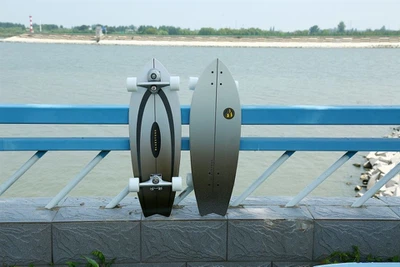
Relaxation
Skateboarding can be a fun and relaxing way to unwind after a long day. You can use a skateboard to take a leisurely ride around your local park or just cruise around your neighborhood and enjoy the scenery.
Since a skateboard deck is made of wood, you need to take certain care of it to prolong its life as long as possible. All wood used in decks was once a living thing that will deteriorate if unprotected. Exposing the deck to moisture, excess heat, or sunlight will accelerate the time it takes for the wood and glue to deteriorate. This doesn’t mean you shouldn’t use your deck and enjoy it as much as possible. However, you should never leave it outside in the rain or in a car on a 110-degree day. I recommend keeping your skateboard in stable conditions, such as in your house or apartment, when not in use.
Using your board will eventually lead to razor tail, chipping, or pressure cracks. These defects will decrease the amount of pop your board has and make it feel less responsive. This phenomenon can be noticed by comparing the sound of tapping a new deck versus an old deck on the ground. There will be an astonishing difference in sound. A new deck will have a much sharper and higher-pitched tap than an old deck.
Keep in mind that every skater has an opinion when it comes to buying or making a new deck. For some, it is when the deck breaks completely in half. For others, it is when the desired amount of pop is gone. I recommend donating your old deck that is still rideable to someone who could use it. If your deck is unrideable, you could also make it into a work of art instead of throwing it into the trash. The edge of the veneers makes artwork with lines that really stand out when dyed. Here are a few items I have made in the past.
Assembling The Skateboard
Assembling a skateboard can be a fun and rewarding process, but it's important to do it correctly to ensure both safety and optimal performance. To get started, you'll need a few key tools and pieces of equipment, including a skate tool, a screwdriver, grip tape, trucks, wheels, and bearings. Once you have your tools and equipment, it's time to start the assembly process. Here are the basic steps:
Begin by applying the grip tape to the deck. Start by peeling off the backing paper and aligning the tape with the deck. Press it down firmly to ensure it adheres properly.
Once the grip tape is applied, use a razor blade or utility knife to trim the excess tape around the edges of the deck. Be careful not to cut into the deck itself.
The trucks are what hold the wheels in place. Use your skate tool to attach the trucks to the deck. Make sure they are aligned properly and tightened securely.
Once the trucks are in place, it's time to install the wheels. Simply push the bearings into the wheels and then slide the wheels onto the axles of the trucks. Make sure they spin freely and don't wobble.
Finally, give your skateboard a quick test to ensure everything is in place and working properly. Stand on the board and rock back and forth to make sure the trucks are secure and the wheels spin freely.
Maintenance Skateboard
Keep your skateboard dry: Moisture is bad for the bearings, trucks, bolts, and deck. Avoid skateboarding when it’s raining or when the ground is wet.
Tighten the hardware after every few uses: After every few skate sessions, use a screwdriver and a wrench to make sure the screw-top nuts and bolts that hold your board’s trucks in place are all the way tight.
Replace bushings when they break down: Inspect the bushings regularly for signs of wear like cracks, crumbling, or squishing.
Clean the bearings every 3 months: Dirty bearings prevent the wheels from spinning smoothly. Use a skate tool to unscrew the bolts that hold your board’s wheels in place and take all the wheels off the axles.
Lubricate the bearings every 3 months: This is the final step to keeping them spinning perfectly. After you clean the bearings and they are dry, squeeze 2 drops of bearing lube into each bearing.
Rotate the wheels every 3 months or sooner: This evens out the wear on your board’s wheels. The best time to do this is after you clean your bearings.
Change the wheels if they start to deteriorate: A fresh set of wheels keeps your board performing as you want it to.
Scrub your deck if it’s really dirty: You really only have to do this for cosmetic purposes. dip a nylon-bristled brush in some warm, soapy water and scrub the grip tape in circular motions.
Sand the edges of the deck if they’re splintering: This helps prevent chipping, especially near the board’s nose and tail.
Replace your grip tape when it wears out: New grip tape can bring a perfectly good old deck back to life.
The right skateboard deck shape for you depends on your size and the style of skateboarding you plan to do. Decks come in many different widths, and you should choose your skateboard based on deck width, not length, according to these general guidelines:
Micro deck: Micro decks have a width of six and a half to six and three-quarter inches. If you are under three feet five inches and wear a size three shoe or smaller, a micro deck is a good choice for you.
Mini deck: Mini decks are the next size up from micro decks, with a width of around seven inches. This board is perfect for skaters who are between three feet five inches and four feet four inches tall and wear a shoe size between four and six.
Mid-size deck: Mid-size decks have a width of seven and a third inches. This deck is best for skaters who are between four feet five inches and five feet two inches tall and wear a shoe size between seven and eight.
Full-size deck: Full-size decks are the standard skate deck for most adults, with a width of seven and a half inches or larger. This deck works best for skaters who are five feet three inches or taller and wear a size nine shoe or larger. For street skateboarding and more technical tricks, you'll need a board width between seven and a half to eight inches. If you want to skate in swimming pools, ramps, and parks, you'll likely need a board width between eight and eight and a quarter inches. For vert skating, pools, and cruising, a wider board of eight and a quarter inches or above will work best.
Skateboard Deck Size Charts
It might take a while before you discover the right deck size for you. Although there’s no real right or wrong, your personal preference, the type of skating, your shoe size, and your height and weight will all factor into your decision. The chart below serves as a helpful guide based on your measurements.
|
Deck size (inches) |
Age |
Height |
US shoe size (men) |
US shoe size (women) |
|
7 - 7.375 |
Under 6 |
3'5" or less |
3-3.5 |
4.5-5.0 |
|
7.375 - 8.0 |
6 to 12 |
3'5" to 5'2" |
4–6 |
5.5–7.5 |
|
8.0 - 8.25 |
13 and older |
5'3" and over |
6.5–9 |
8–10.5 |
|
8.0+ |
Adults |
5'3" and over |
9.5 and over |
11 and over |
Skateboard Width
Deck width is a key consideration when choosing a skateboard. As shown in the table above, this can vary from a micro board’s 6.5–6.75 inch width, all the way up to anything over 8.5 inches wide, which falls into the category of a full-size board. If you choose a deck that’s too wide for you, chances are you’ll need to exert more energy in controlling your board, which, in turn, makes pulling off tricks – and just skating in general – more difficult. On the flip side, if you choose a board that’s too narrow for you, you’ll probably have issues balancing, which affects your stability and control of the skateboard. Here are some general guidelines you can follow:
Narrow decks are a good place to start for younger, smaller skaters
Decks with a smaller to medium width are better suited for street skating and tricks
Wider decks are the go-to choice for transition or pool skating and cruising
Skateboard Length
Ranging from about 28 inches to 33 inches, most street skateboards have a similar deck length. The slightly shorter ones are ideal for younger skaters, but overall, the length of your skateboard isn’t going to have much impact on your skating – much unlike the width – unless you want to longboard.
What Repairs Can Be Done To A Skateboard?
There are a few things that can be done to repair a skateboard. These include fixing the trucks, replacing the bearings, and tightening the nuts and bolts.
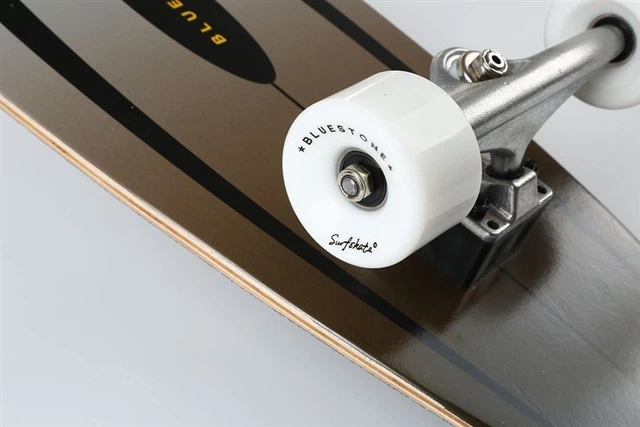
The trucks are one of the most important parts of the skateboard, and they need to be in good condition in order for the board to work properly. If they are loose, it can cause the deck to wobble and make it difficult to control. Tightening the trucks is a simple repair that can be done with a wrench.
The bearings are another vital part of the skateboard, and they allow the wheels to spin freely. Over time, these bearings can become worn out and need to be replaced. This is a more complex repair, but it is still relatively easy to do.
Finally, the nuts and bolts on the skateboard can become loose over time. This can cause the deck to become unstable and make it difficult to ride. Tightening these nuts and bolts is a simple repair that can be done with a wrench.
How to cooperate with us?
Customization options
Our custom skateboard deck service also allows our customers to have full control over the design process. With our advanced production technology, we are able to produce skateboard decks in a variety of shapes and sizes, and we can even print custom graphics, logos, and pictures onto the deck.
Unique design
Our designers are experts in their craft and use their creativity and expertise to develop eye-catching graphics that stand out from the crowd. Whether your customer is looking for a design that features bold colors or intricate patterns, we have the capability to deliver on their vision.
Strong materials
At our manufacturing company, we source the highest quality materials to construct our custom skateboard decks. This includes using premium Canadian maple wood, which is known for its superior durability and strength.
Quality control
At our manufacturing company, our commitment to quality control is second to none. We employ a rigorous quality check system to ensure every custom skateboard deck that leaves our facility reflects our dedication to producing high-quality products.
Certifications


ChenShuo sports as professional skateboard manufacturer committed to producing visually appealing, durable, and safe skateboards using high-quality materials and the latest technology.


Frequently Asked Questions Skateboard
Q: What do skateboarders call their boards?
Q: How do you know if a skateboard fits you?
(Mini/Small) 7.00" to 7.50": Narrow decks are better for youths 8 to 12 years old.
(Mid Size) 7.50" to 8.00": A medium deck width is best for teens age 13 and older or adult riders who street skate or skate on street terrain.
Q: What is top of skateboard called?
Q: What is the shape of a skateboard called?
Q: How many bearings does a skateboard need?
Q: What is the design under a skateboard called?
Q: What is a classic skateboard called?
Q: What wood is used for skateboards?
Q: How many bushings does a skateboard need?
Q: How many layers does a skateboard have?
Q: What are skateboard riser pads?
Q: What is the metal part of a skateboard called?
Q: What is the strongest wood for skateboards?
Q: What is the best glue for skateboards?
Q: Does skateboard wood matter?
Q: How many screws are in a skateboard?
Q: How long do skateboard bearings last?
Q: How thick are long boards?
Q: Do skateboards need grease?
Q: Do skateboard bushings wear out?
We're well-known as one of the leading skateboard manufacturers and suppliers in China. If you're going to wholesale skateboard made in China, welcome to get quotation and free sample from our factory. Also, customized service is available.
Longboard, Skateboard, Kids Balance Board